Relocation of production
Production relocation refers to a company's strategic step of moving parts of its production to a different location.
This can have various reasons: cost savings through lower wages, tax advantages, better infrastructure, or proximity to new markets. Careful planning is crucial to minimize potential risks such as reduced quality, longer delivery times, or cultural differences. If implemented successfully, relocating production can strengthen competitiveness and promote long-term company growth.
Walter Meitz
Your contact person for all questions, references, procedure, etc.
Walter Meitz
+43 664 654 06 79
This email address is stez protected from spambots. You need javaScript Enabled to view it.
Are you looking for a service provider to professionally implement your production relocation projects?
The IQX GROUP is the ideal partner for the successful planning and implementation of production relocations. Our expertise is based on years of industry experience, combined with a deep understanding of the complex challenges and opportunities associated with such a strategic decision. Here are some reasons why we are the optimal choice as an external service provider for your production relocation:
Holistic approach and tailored solutions
Every production relocation is unique. We don't offer standard solutions, but rather develop customized strategies tailored to the specific requirements of your company and industry. From site analysis and cost-benefit analysis to logistical implementation – we cover all relevant aspects to ensure a seamless relocation.
Risk reduction through sound expertise
Relocating production often carries risks, from quality issues to unexpected logistical challenges. The IQX GROUP possesses in-depth expertise in risk minimization. Our experts identify potential obstacles early on and develop proactive measures to avoid delays and costly errors.
Optimal resource utilization and efficiency improvement
By relocating production, companies can not only save costs but also optimize their production processes. We support you in structuring the relocation in such a way that you benefit from maximum efficiency. Our team analyzes your existing production processes and proposes improvements that will have a long-term impact on productivity and profitability.
international experience and global networks
As an internationally operating service provider, the IQX GROUP has an extensive network of partners and resources worldwide. Whether it involves developing low-cost countries or relocating to markets with specific tax or logistical advantages – we know the local conditions and have the necessary contacts to accelerate the relocation process and make it cost-efficient.
Transparency and clear communication
Throughout the entire process, we place great emphasis on transparent and open communication. We will guide you step by step, keep you informed of every step of the way, and ensure that all decisions are made in line with your business objectives.
Focus on sustainability and future viability
In times of increasing environmental regulations and the demand for sustainable business practices, we at IQX GROUP are always thinking one step ahead. Our production relocation strategies consider not only short-term cost advantages, but also long-term sustainability and adaptability to future market demands. This ensures that your production remains future-proof and competitive in the new environment.
With the IQX GROUP at your side, you benefit from an experienced, reliable, and solution-oriented partner who helps you fully exploit the potential of relocating production. Our proven methods and customized approach guarantee a smooth implementation that will sustainably strengthen your company.
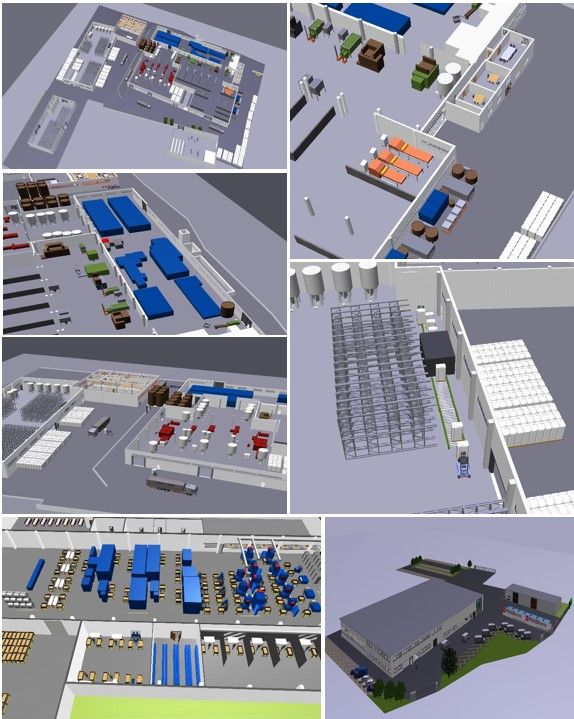
Phases of a production relocation
During the planning phase, the decision to relocate production is thoroughly examined. The reasons for the relocation are identified, such as cost optimization, market adjustments, or the need for capacity expansion. Key steps in this phase include:
- Location analysis : Evaluation of potential locations based on costs, availability of skilled workers, infrastructure and political framework conditions.
- Economic feasibility study : Creating a business case that outlines all costs and potential savings.
- Risk assessment : Analysis of potential risks, e.g. supply chain disruptions, quality problems or cultural differences.
In this phase, the production processes for the new location are developed or adapted. The aim is to ensure that the production capacities meet the company's requirements. The most important aspects are:
- Process design : Optimization of production processes for the new location.
- Equipment planning : Decision on relocating or purchasing new machinery and equipment.
- Quality standards : Ensure that the same or higher quality standards are maintained at the new location.
Before the complete relocation takes place, it is advisable to conduct test runs at the new location. This phase helps to identify potential problems early and make adjustments. The steps include:
- Test production : Small production runs to check machine performance and process stability.
- Staff training : Training new staff to ensure they are familiar with the production processes and technology.
- Adjustments : Optimization of processes based on the results of the trial runs.
This phase involves the actual relocation of production. Close coordination is essential to minimize downtime and ensure the smooth integration of the new site. Key points include:
- Transport and installation : Relocation of machinery and equipment to the new location.
- Supply chain integration : Adapting supply chains to ensure the supply of the new location.
- Production at the new site : Resumption of full production capacity after successful completion of the test runs.
After the relocation, it is important to continuously monitor and optimize operations at the new location. The goal is to maximize efficiency and address any potential problems early on
- Quality controls : Ensuring that the production quality meets the expected standard.
- Performance monitoring : Continuous review of production output compared to targets.
- Continuous improvement : Adjustments and optimizations based on the collected data and experience.
Required social skills of a relocation manager
One of the most fundamental skills is clear and effective communication. The production relocation manager must be able to convey information between different teams, departments, and hierarchical levels. This includes:
- Transparent communication : Clear communication of project goals, expectations, and progress.
- Adaptability : The ability to adapt communication depending on the recipient, whether it be management, technical staff, or external partners.
- Active listening : Being open to feedback and concerns from the employees involved in order to avoid misunderstandings and find solutions early on.
Relocation projects can often be associated with uncertainty and stress for the employees involved. An empathetic manager understands the emotional and psychological challenges the team faces and addresses them:
- Understanding concerns : Acknowledge that employees may have concerns about changes such as a production relocation and actively listen to them.
- Promoting a positive working environment : Strengthening team spirit and building trust to make the transition as smooth as possible.
A production relocation manager must be able to lead, motivate, and focus a cross-functional team on a common goal. Leadership skills are crucial here
- Motivation : Motivate employees through goal setting and recognition, especially when the project is challenging or lengthy.
- Delegation : Distributing tasks effectively by recognizing and utilizing the strengths of individual team members.
- Conflict management : Identifying conflicts or misunderstandings within the team early on and resolving them constructively.
When relocating production internationally, it is important to understand intercultural differences and deal with them respectfully. The manager should:
- Cultural awareness : Understanding of different working styles, communication methods and behaviors in other countries and cultures.
- Respect and tolerance : Being sensitive to cultural differences to promote cooperation and mutual trust.
Production relocation projects often bring unforeseen challenges. A manager must think creatively and in a solution-oriented manner
- Critical thinking : The ability to approach problems analytically and to quickly find practical solutions.
- Decisiveness : Making quick and well-founded decisions in difficult situations to ensure project progress.
Relocating production is often associated with great pressure. The manager must remain calm and able to act even under stress
- Resilience : The ability to cope with stress and deadlines without compromising one's own effectiveness or that of the team.
- Flexibility : Adaptability to changing circumstances, especially in the face of unforeseen challenges.
In a production relocation project, there are often numerous stakeholders, such as suppliers, customers and authorities, with whom negotiations must take place:
- Assertiveness : Conducting clear and fair negotiations to achieve the best conditions for the company.
- Willingness to compromise : Finding solutions that are acceptable to all parties involved without jeopardizing the project goals.